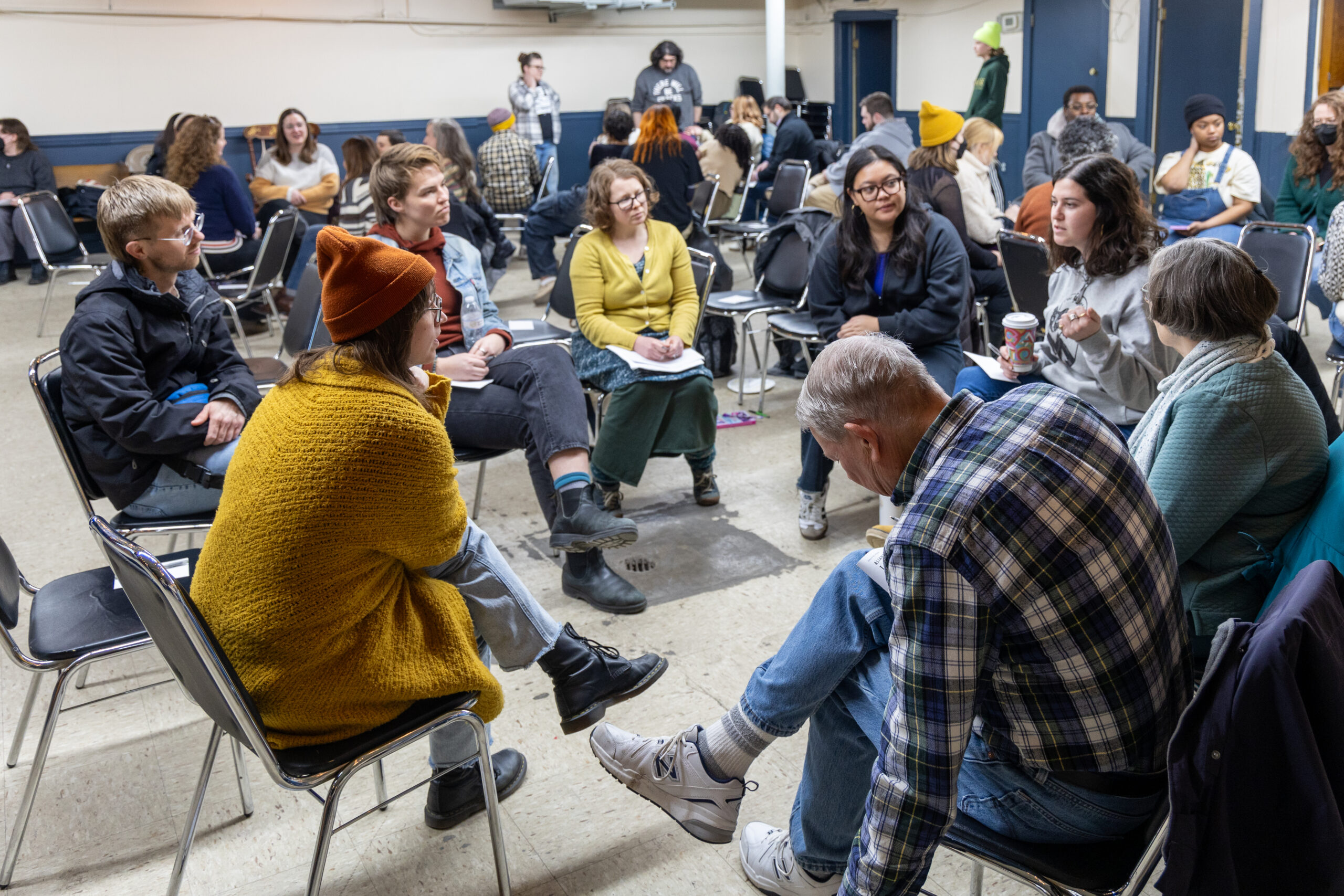
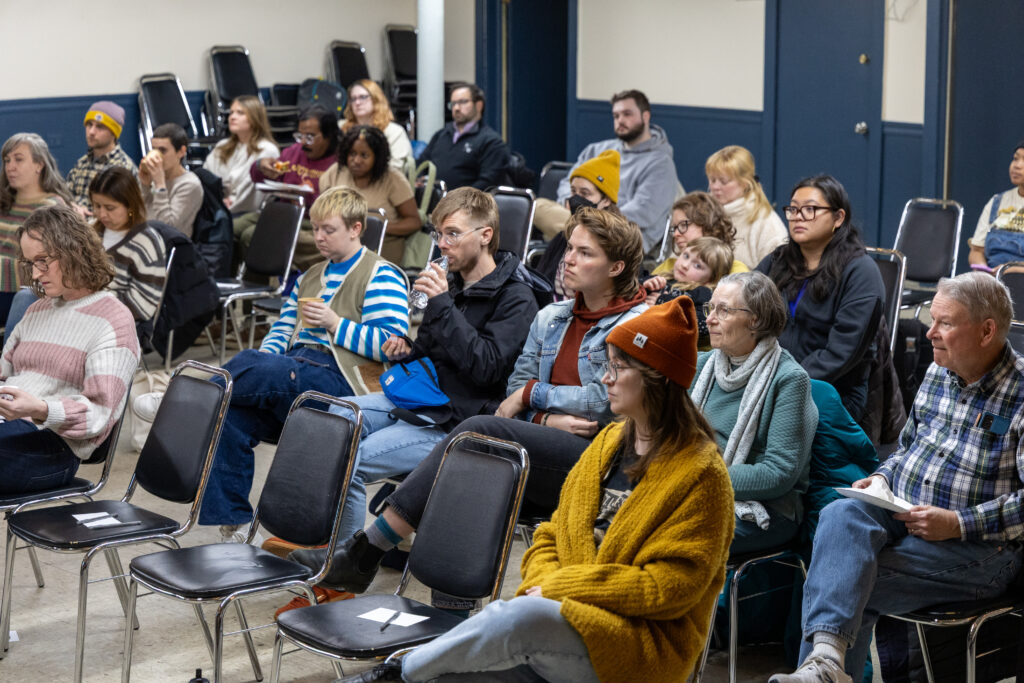
On February 23, we gathered around 50 members of The People’s Lobby at St. Luke’s Lutheran Church of Logan Square for a State Budget Teach-In.
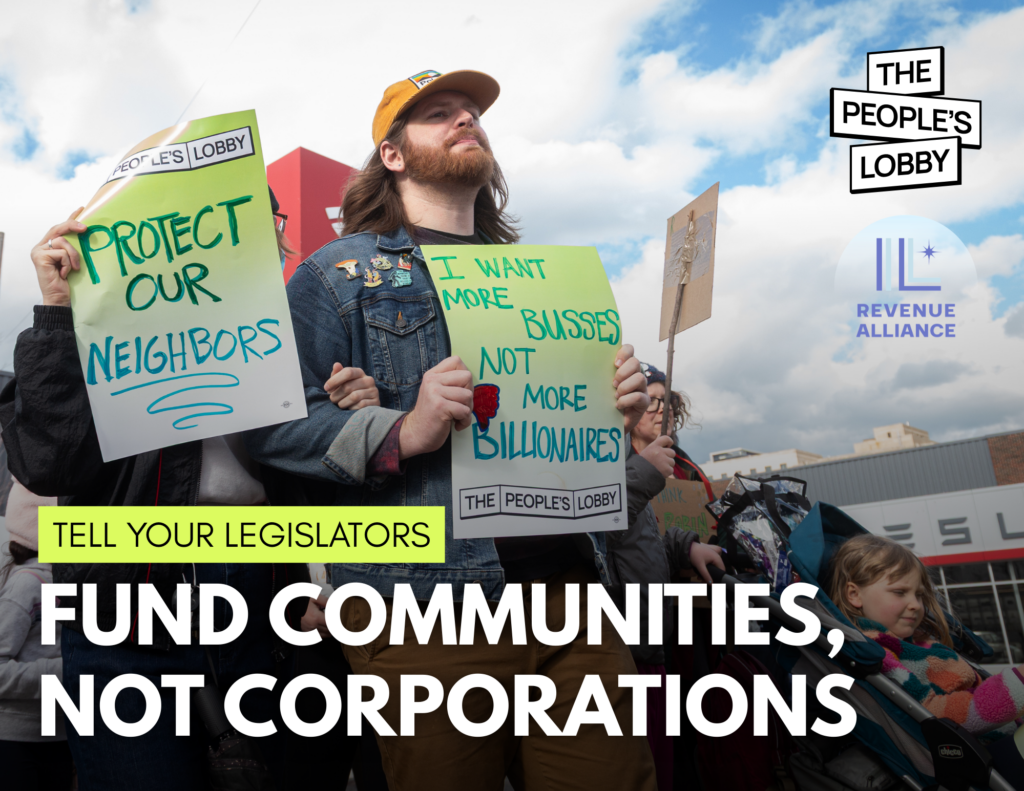
Our message was clear: Illinois has the resources to fully fund our schools, protect healthcare, and support working families. What it lacks is the political will to make corporations and billionaires pay their fair share. With the Illinois Revenue Alliance, we’re fighting to make it happen.
The Problem: Corporate Greed Is Costing Us Everything
Illinois has the eighth most regressive tax system in the country, according to a report by the Institute on Taxation and Economic Policy. That means the people who most depend on public services are also the ones bearing the most responsibility for funding them, while corporations and the wealthy find every available escape hatch.
Pastor Erin Coleman Branchaud, board chair of The People’s Lobby Education Institute and host pastor at St. Luke’s, put it plainly: “Corporate greed is the reason that we have money to fund ICE here at home, and unjust wars abroad, but not enough money to fund the things our communities need.”
Congress recently passed a sweeping budget delivering massive tax cuts to corporations and the top 1% while cutting healthcare, slashing SNAP, and dramatically expanding ICE and CBP budgets.
The corporations benefiting aren’t passive bystanders. AT&T profits from ICE contracts. Amazon donated millions to the Trump inaugural fund while its web services make government surveillance easier. Target reversed its DEI commitments and allowed ICE to stage operations on its property. Their loyalty is not to us, but to their profits, she said.
Even corporations not directly partnering with ICE drain public resources by doing business in Illinois without contributing equitably. “When corporations fail to pay their fair share in taxes,” Branchaud said, “we end up with budget cuts like elimination of mental health care, an end to hot breakfast for public school students, cuts to food assistance, and more. Our communities are suffering, and people are dying because of corporate greed.”

Annie Jacobs, a member and former hospital financial counselor, described what happens when public investment fails our communities. During the 2008 financial crisis, she assessed patients for Medicaid eligibility on Chicago’s South Side, which showed her how failing health care access impacts vulnerable populations.
Once, she saw a 23-year-old woman come to the ER 26 times because she couldn’t afford insulin. She watched an undocumented man in his late 50s survive two weeks on a respirator only to face $500,000 in medical bills with no path to coverage. “I counted it a good day if I found one patient I could actually help,” she said. “And for the other 14 to 19, I saw their lives crumble.”
Illinois’ Health Benefits for Immigrant Adults program, which provided Medicaid-like coverage to undocumented residents, was a hard-won protection for people in exactly these situations. It was discontinued last July due to budget cuts. “The outlook is darkening once again,” Jacobs said. “Our only choice is to save ourselves by raising state and local revenue and using it to fund the services we need.”
The Solutions Are Already on the Table
On February 18th, Governor JB Pritzker delivered his budget address. His proposed new revenue — a social media platform tax, a gaming tax adjustment, extended corporate loss deduction limits, and a reduction in the state income tax share sent to municipalities — totals roughly $649 million. That’s just enough to offset the $567 million Illinois is projected to lose from federal cuts, with little left over.
But with health care, food assistance, housing, and education programs under attack, we need bolder proposals. “What’s absent from the budget is any long-term structural reform,” said Maeve Raphelson, a social worker and therapist. “Families are already struggling under the status quo, and incremental steps will not be enough to shield them from the scale of the federal threat we are facing.”
Four bills have already been introduced in the Illinois legislature that together would generate over $7 billion in new annual revenue.
- Digital Advertising Tax: $1.1 billion. A 10% tax on digital advertising revenue for corporations making over $150 million from digital ads. Big Tech profits from our data, but this makes them contribute something back.
- Tax Haven Reporting: $1.2 billion. Worldwide combined reporting would require corporations to include foreign subsidiary income when calculating their Illinois tax obligation, closing a loophole that lets them hide profits offshore.
- Closing Corporate Tax Loopholes: $700 million. Illinois automatically inherits federal corporate tax giveaways because state tax code conforms to federal law by default. Illinois can and should decouple and close loopholes that Governor Pritzker identified back in 2021 but never acted on.
- Billionaires Wealth Tax: $916 million. A mark-to-market tax applying Illinois’ 4.95% income tax rate to the annual appreciation of billionaire assets. If Illinoisans can pay taxes based on the value of their homes, billionaires can pay taxes based on the value of their equities.
“The money is there,” Raphelson said. “The solutions are obvious. We just need the political will to act boldly.”
What You Can Do
We have two months before the legislative session ends in May.
Cuts are a choice. Protecting billionaires over working families is a choice. And so is fighting back.