
On May 31, the Illinois legislature passed a tax on digital advertising revenue from tech companies like Meta, Amazon, and Google.
Big Tech resisted this and will challenge it in court. Nevertheless, we expect it to generate over $1.1 billion annually, a major increase in our state’s budget but still only a sliver of the mega-corporations’ runaway profits.
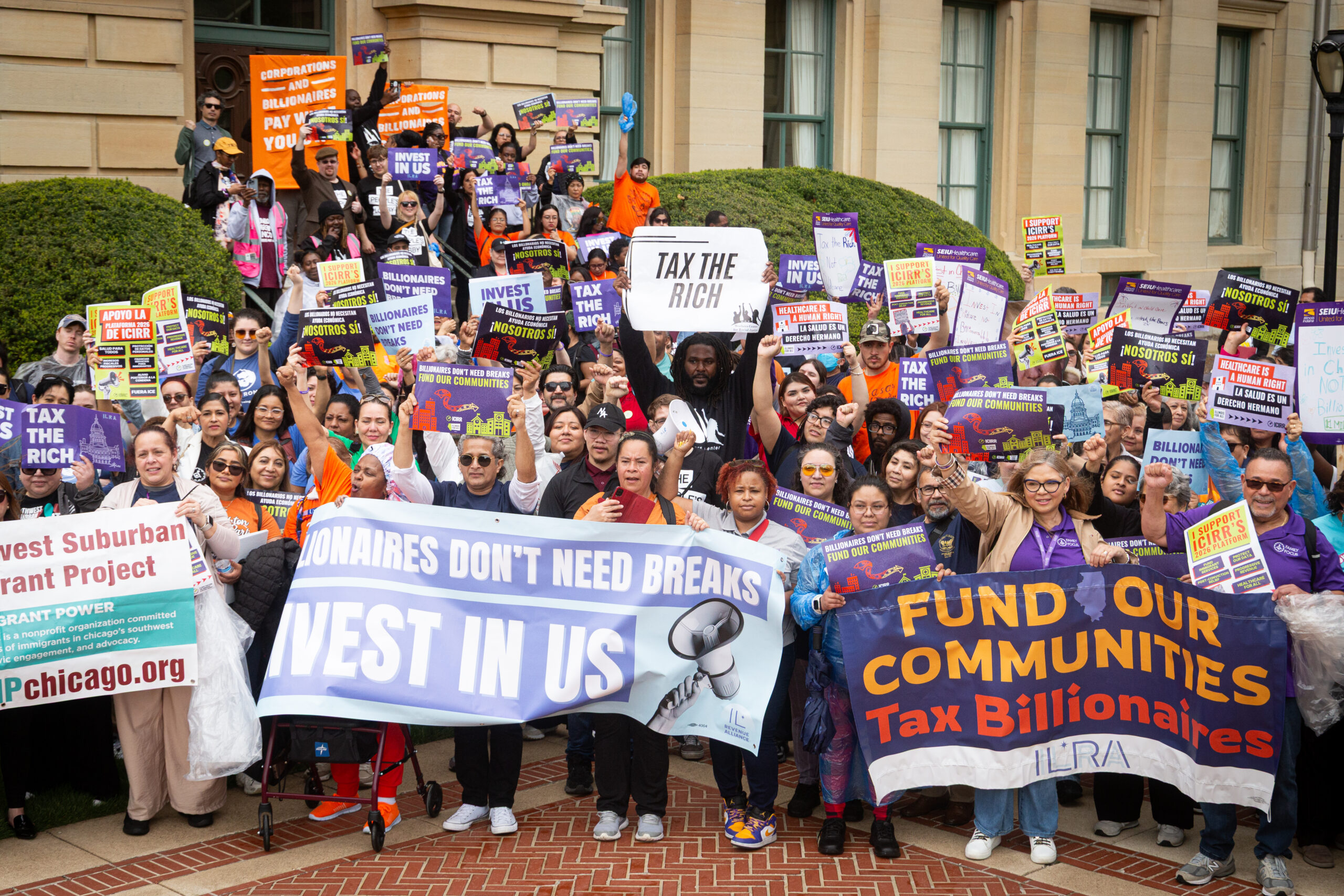
This is a breakout victory for the Illinois Revenue Alliance, of which we are a member organization. This demonstrates how grassroots organizing can fight back against widening wealth gaps, cuts to essential services, ballooning corporate power, and growing authoritarianism.
ILRA organized massive days of action at the state capitol and grassroots lobbying of legislators. Our organizations’ lobbying and government relations staff collaborated daily inside the capitol, working with legislative allies to ensure chamber leaders heard the demand for progressive revenue.
Additionally, as part of the PowerUp Coalition, we staged two actions targeting Amazon. We targeted Amazon because the corporation currently pays no taxes at all on the billions it makes selling our data for digital ads each year.
On May 16, The People’s Lobby blocked both exits of the Amazon warehouse at 36th and Ashland in Chicago’s Bridgeport neighborhood in May. For five hours, about 100 delivery vans, as well as dozens of workers, were unable to generate profits for Amazon and billionaire CEO Jeff Bezos until the police ultimately came and arrested 12 members of our civil disobedience team. Our action helped push the Illinois state legislature to pass this tax.
This year, state lawmakers convened an Affordability and Tax Justice Coalition and organized with their colleagues to demand that every budget make strides towards transforming our state’s tax system. Through this campaign, along with the dedicated work of bill sponsors and corporate tax champions, Senator Robert Peters and Representative Norma Hernandez, we secured one of our biggest victories yet — the passage of the Digital Ads Tax.
In addition to the Digital Ads Tax, the legislature passed other measures to bring in needed revenue. More of them can see the widening gap in power and wealth and, now that we have called the question, are declaring with their votes that Big Tech corporations — instead of donating to ballrooms and inaugurations and accumulating profits and asset valuations — ought to contribute more to the wellbeing of Illinois families, to pay what they owe towards schools, healthcare, food, affordable housing and all the public services our families deserve.